A fashion revolution is taking place in the United States. Although the nation has traditionally been linked to the industry and leaders of mass production and fast fashion, there is a new generation of designers, entrepreneurs, and conscious customers who are redefining the situation. Sustainable fashion brands in the USA, including those that are located in California and New York, are showing how style and environmental responsibility can exist in a perfect relationship. These are not merely clothing companies; they are also the pioneers of open supply chains, investing in new eco-friendly materials, and designing business models that last longer, not ones meant to be thrown out. With the ever-increasing consumer awareness and the need to wear ethical fashion, American brands are rising to the occasion. This guide examines the top sustainable businesses in the clothing industry that are transforming the industry, showing that the future of American fashion is unquestionably green, ethical and sustainable, long-lasting.
What Makes a Fashion Brand Truly Sustainable?
Before evaluating particular brands, it is necessary to know the difference between truly sustainable fashion and greenwashing marketing statements. Full fashion sustainability has several aspects that interrelate throughout a product’s lifecycle.
The basis is Eco-Friendly Materials. This will entail focusing on organic cotton produced without the use of harmful pesticides, recycled fabrics transformed into new products, new fabrics such as Tencel or hemp that use little water and chemicals, or synthetic ones that do not release microplastics into the waters.
Ethical Manufacturing and Labour Practices mean that those who produce our clothes work under secure conditions, are paid well, and are treated with dignity. This involves having transparent supply chains whereby the brands can know the precise origin and how their clothes are made.
Circular Design Principles are based on designing clothing that is designed to last, repairable, and can be later recycled or biodegraded after end-of-use. This strategy is a direct challenge of the linear take-make-dispose system that has destroyed our world.
Authentic, sustainable brands and those that merely take advantage of green marketing exist because of transparency and accountability. Legitimate businesses freely provide details regarding their materials, manufacturing procedures, carbon footprint, and the areas where they have yet to make progress.
Durability and Timeless Design imply making products that will be stylish and useful over the years, instead of being a frivolous trend. This slow fashion ideology minimises the consumption rate and the general environmental impact.
U.S. brands are also becoming more successful in these aspects due to consumer demand and increasing awareness that sustainable practices are not only ethically right but also necessary to do business in the long term in a climate crisis world.
Top Sustainable Fashion Brands in the USA
Patagonia: The Gold Standard of Environmental Activism
Patagonia was born in California in 1973 and has become one of the names associated with environmental responsibility in the American fashion industry. The company’s founder, Yvon Chouinard, created Avalon Corporation on the radical idea that companies should not do any harm that is not necessary and should use the available resources to solve the environmental crisis.
The sustainability efforts at Patagonia are detailed and on the cutting edge. They work with organic cotton, and apply recycled materials in 87% of the line, and were the first to launch the Worn Wear program- a system to sell and purchase used Patagonia items that ensures outwear stays in the cycle. They have factories that are Fair Trade Certified and guarantee that they uphold ethical labour practices, and within their whole business, they aim to be carbon neutral by 2025.
The real difference between Patagonia and other retailers is its activism. They have donated more than 140 million dollars to environmental groups, openly challenged customers to purchase less, and even sued the Trump administration regarding protecting public lands. Their Don’t Buy This Jacket campaign was a critique of consumerism, per se, the first time a retail company defied its own tradition to do so.
Their better sweaters, recycled using fleece, and down jackets with traceable down are the signature collections that show that technical performance and sustainability do not necessarily need to be mutually exclusive. Patagonia demonstrates that sustainable fashion companies in the USA are not only profitable but also responsible.
Reformation: Making Sustainability Stylish
Reformation, a sustainable fashion clothing company based in Los Angeles, made sustainable fashion no longer a serious undertaking but actually desirable. Established in 2009 by Yael Aflalo, Reformation came to be known for using trend-driven dresses and jumpsuits and comfort apparel that just happens to be environmentally friendly, not environmentally friendly clothes that just happen to be stylish.
The brand’s sustainability strategy focuses on measuring and reducing environmental impact. They trace the carbon, water, and waste footprint of all their garments and post this ‘RefScale’ information on the garments so customers see what they are actually buying. Reformation is devoted to deadstock fabrics (unused materials of other fashion houses), sustainable viscose, recyclable materials, and organic cotton.
Their factory in Los Angeles is powered by renewable energy, and they have committed to being climate positive through their investment in environmental projects, which will offset more carbon than they emit. The same transparency is apparent through the publication of detailed sustainability reports that are open and frank about success and failure.
Their Gavin Linen Dress and other wrap dresses, among many other best sellers, have gained cult status in the minds of sustainable fashion enthusiasts. Reformation proves that conscious consumerism does not mean giving up style or modernity an important lesson in making the idea of sustainable clothes appealing to the masses.
Everlane: Radical Transparency in Pricing and Production
Everlane disrupted the fashion business in San Francisco with its radical transparency model, which deconstructed the actual price of the manufacturing process and displayed to clients what they actually paid. Everlane was founded in 2010 and was built on challenging the conventional approach to markups and introducing the ethical basis of manufacturing at the same time.
The brand also collaborates with ethical manufacturers all over the globe (some of them are located in the U.S.). They visit those factories personally and mention them in the marketing resources. Customers can know the origin of their clothes, what they cost, and how fair prices are calculated at Everlane.
Everlane’s sustainability initiatives include its 100 per cent Human collection with solely ethical factories, its ReNew collection made of recycled plastic bottles, and its resolution to eradicate virgin plastic in its supply chain. It has also adopted the manufacturing of denim that consumes 90 percent less water compared to traditional production and leather tanning without the use of toxic substances.
They are single-minded in their strategy of providing wardrobe essentials in neutral shades that can last years, and this fits the concept of slow fashion. The modern point shoe and their Day Glove flat, along with their range of t-shirts and sweater collections, have been minimalist wardrobe items. Everlane shows that a lack of transparency and simplicity may be a strong differentiator of sustainable fashion.
Outerknown: Surf Culture Meets Sustainability
Outerknown was co-founded by professional surfer Kelly Slater in 2015 with the goal of showing that sustainable clothes could be durable and stylish enough to serve the durability needs and style requirements of active lifestyles. Based in California, Outerknown takes the natural relationship of surf culture with ocean health into each design choice.
The brand utilises organic, regenerative, and recycled materials virtually. The Blanket Shirt line, crafted in soft organic cotton, is their signature, and it has become a symbol of sustainable menswear. Outerknown was also the first to use Econyl, a regenerated nylon made from fishing nets and other marine waste, in their boardshorts and swimwear.
Being a Fair Trade Certified brand, Outerknown is also sure of ethical labour practices in its supply chain. Its goal is to use solely sustainable materials by 2030, and it collaborates with various environmental organisations that aim to protect the ocean.
Their S.E.A. Jeans (Social and Environmental Accountability) are some of the most sustainable denim in the market, with organic cotton, natural indigo, and waterless finishing. Outerknown illustrates how sustainable fashion companies in the USA can grow out of sincere relationships with the environment and the way of life, not business interests.
Christy Dawn: Regenerative Fashion from Farm to Closet
Los Angeles-based designer Christy Dawn has based her eponymous label on a radically sustainable mission statement: regenerative agriculture-driven fashion. Christy Dawn was created in 2013 but was initially a romantic dress brand that used deadstock cloth. However, over the years, it has developed into something bigger: a closed-loop system that links the regenerative farms directly to the finished dress.
The brand’s Farm-to-Closet project collaborates with regenerative cotton farms, which enhance the health of the soil, carbon sequestration, and biodiversity. This is even more organic than organic, to the extent of restoring damaged land by conventional farming. Christy Dawn can follow an item of clothing to the exact farm where the cotton was grown, a level of transparency unattainable in fashion.
Their prairie dresses, made of lightweight cotton with vintage-like shapes, stand out as their signature. This attracts customers who wish that their clothes can provide aesthetic beauty and be environmentally friendly. The small-scale production means that there is less wastage, and the classic designs will never go out of style, season after season.
Christy Dawn also provides the Forever Program, under which customers can send used dresses to be re-created in a new form. This program reflects the principles of circular fashion. The brand demonstrates the ability of small-scale sustainable fashion brands in the USA to set the example for innovative approaches followed by bigger companies.
For Days: Pioneering Closed-Loop Clothing
For Days is an NY-based company that started in 2018 with a groundbreaking idea, namely clothes that do not become waste. Their closed-loop model enables their customers to use old For Days clothes in the exchange of new ones, and afterwards, the returned items can be resold, recycled into other products, or even composted properly in case of irreversible damage.
The Take Back Bag program makes circularity tangible and convenient through a subscription-based system. Customers place For Days items in bags and ship them back to get credits as new ones. The brand uses organic cotton, recycled materials, and nontoxic dyes and offers low prices.
For Days specializes in everyday clothes, including T-shirts, hoodies, sweatpants, and underwear. Their clothes are aimed at being durable and worn on a regular basis. With their minimalist style and casual fabrics, they are really livable, not conceptually entertaining.
Days will have solved one of the most significant issues in fashion sustainability by mitigating the end-of-life issue that afflicts most clothes. They show that ethical fashion can become more accessible to consumers and that drawing more customer loyalty through ethical business practices can be implemented.
MATE the Label: Minimalist Essentials with Maximum Ethics
California MATE the Label demonstrates the combination of minimalistic aesthetics and maximum sustainability. The brand was founded in 2013 and produces elevated basics, including soft T-shirts, cosy loungewear, and necessary dresses, made out of non-toxic, natural, and organic fabrics only.
The entire product is produced in Los Angeles under fair labour procedures, and the brand has a good rapport with its small-scale production associates. MATE is made of organic cotton, non-toxic dyes, and sustainable production processes that minimise water and chemical waste.
They have gained popularity among sustainable shoppers who want to be comfortable without sacrificing their style with their Organic Pima Lounge Set and other ribbed bodysuits. The brand’s earth-tone colour scheme and uncomplicated silhouettes make up a unified, mix-and-match wardrobe designed to endure.
MATE the Label demonstrates that sustainable fashion can also be luxurious, affordable, and highly ethical at the same time, which young consumers are especially fond of as they refuse to compromise between values and looks.
Tyler the Creator Merch: Artistic Vision Meets Conscious Production
The strategy of Tyler the Creator with merchandise forms a paradigm shift of artist-based fashion in the context of sustainability. Instead of considering merch as a disposable item in a tour that will be sold, Tyler has transformed his collections into well-designed and well-constructed merchandise that represent the principles of sustainable fashion, even as the industry struggles to acknowledge it formally.
The unique feature of the tyler the creator merch in the context of the sustainable fashion brands in the USA is a predetermined anti-fast-fashion philosophy implemented in each collection. Every issue focuses on artistic integrity instead of mass production, with a unique design, strong color schemes, and design features which show true creative thinking. The transformation of the raw underground design of Odd Future merch to the current advanced products shows that there was a maturation of the design and production values.
The sustainability strategy is focused on quality and long-term. The quality of the construction is noticeable at the first sight through the tyler the creator shop online or seeing the pieces physically, the quality of the cloth used is weighty and will not wear out after several years, the stitching is very strong and the patterns are presented on a high level. They will not crack or fade over the years. This longevity is a direct response to planned obsolescence, that is, the primary attribute of fast fashion, which pushes customers to repeat the use of items instead of constantly purchasing new ones.
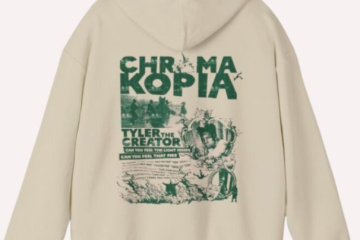
The lack of large-scale production and deliberate drops ensures that there is no overproduction crisis as faced by mainstream fashion. The example of the chromakopia released merchandise is the perfect example of this strategy, since they are an edited line of merchandise that sells fast and retains its value in the resale market, which is also an essential indicator of the circular economy. Likewise, the merchandise sold by chromakopia tour at live shows is based on the same philosophy of quality over quantity and an attempt to make real memorabilia as opposed to a disposable/trashy souvenir.
This curatorial ethos is evident in the tyler the creator store experience, including physical and digital experiences. Instead of bombarding consumers with a barrage of choices, the tyler the creator golf collections and seasonal drops have high concentrations of collections that seem deliberate and exclusive. Every drop is a unified narrative, both the experimental visuals of tyler the creator chromakopia merch and the releases of the previous era.
The artistic uniqueness of every collection brings out timeless artworks that are not restricted to any season. Tyler the creator merchandise does not become outdated in a couple of months–these objects of cultural time will always be contemporary and unique to wear. The whimsical extravagance of tyler the creator golf, the edgy experimentation of Chromakopia and the nostalgic storytelling of the past all retain their aesthetic influence and cultural appeal.
Tyler has made a bigger contribution to the streetwear industry’s thought process regarding sustainable clothing than his own contributions. By going to the Tyler the Creator shop or picking up Tyler the Creator tour products at concerts, fans engage in a culture that values quality over quantity, creativity over consumption, and the long-lasting effect over short-lived trends.
The society surrounding Tyler the Creator merchandise intuitively is pro-sustainability. Fans value their pieces, resell items to keep them in the market, and see purchases as investments in art and culture rather than impulse buys. Such a change in consumerism is precisely the cultural transformation that would allow sustainable fashion to thrive in America.
The Impact of Sustainable Fashion on the Industry
The emergence of sustainable fashion brands in the USA establishes a wave that individual businesses feel much further than just. These innovators fundamentally change consumer expectations, industry norms, and the wider discussion of how fashion fits into environmental and social justice.
Consumer behaviour is changing quantitatively. Research indicates that three-quarters of millennials and Gen Z consumers would be willing to pay a premium on sustainable products, and they are becoming more inclined to research the environmental and ethical policies of the brands and make purchases. This population strain is compelling even formerly unsustainable fast fashion firms to make at least a token gesture in the direction of green.
Circularity has become mainstream, and this has seen the resale market explode. Second-hand shopping has become a norm through platforms such as ThredUp, Poshmark, or Depop, with a resale market expected to grow twice as fast as the fast fashion market by 2030. This makes the clothing last longer and decreases the production demand.
Standards and certifications are on the rise, and consumers have the means to check sustainability assertions. The Fair Trade Certified label, the GOTS (Global Organic Textile Standard), the B Corp certification, and the Bluesign approval assist in the division between genuine commitment and greenwashing. American brands are also seeking such third-party validations to create trust.
According to industry players, the new currency of fashion is transparency. Dr. Christina Dean, the founder of Redress, notices that brands can no longer afford to be obscure regarding supply chains and unclear sustainability statements. Customers and advocates can use means to enquire and uncover empty promises, with genuine devotion or reputational damage.
The pace of material innovation is increasing, and some of it is fueled by the need of sustainable brands to have a better alternative. Mushroom leather, algae-textiles, lab-grown silk, and food waste fibres are materials moving from the experimental to the commercially viable stage. U.S. brands tend to be the first to adopt such innovations and, in such a way, scale them.
However, sustainable fashion brands show that being ethical does not necessarily mean you cannot profit and grow. Patagonia, Reformation, and other companies prove that sustainability is not some niche idea; it is a viable and scalable business model that can appeal to millions of consumers.
Conclusion: Supporting the Sustainable Fashion Movement
Sustainable fashion companies in the USA, which are mentioned here, are not merely shopping but are drivers of change in an industry that sorely needs to be changed. Through the activist leadership of Patagonia or new conscious streetwear brands that combine culture and awareness, these companies demonstrate that fashion can be a good thing.
We are consumers, and our decisions are very important. Each purchase is a contention favoring some vision of what fashion ought to be. When we wear sustainable apparel from ethical brands, we vote for better labor, cleaner production, and a healthy planet. We also provide clear market messages that change industry standards and motivate other companies to do the same.
There is no way to go with perfection; no brand has resolved all sustainability issues. Supporting those who make an effort, holding companies responsible for their claims, and taking a constant step towards improvement are all about it. You are buying technical clothing at Patagonia, perfect dresses at Reformation, or some up-and-coming brands with a new way of thinking about conscious consumerism. Still, you are also engaged in the transformation that fashion needs.
Sustainable fashion is trendy in the future of American fashion only because it is the only way out. It is one carefully crafted, socially responsible, and well-loved garment at a time when these brands are creating that future.
To better understand how sustainability is changing the culture of streetwear in particular, see our pillar piece, Sustainable Fashion: The Future of Conscious Streetwear.